

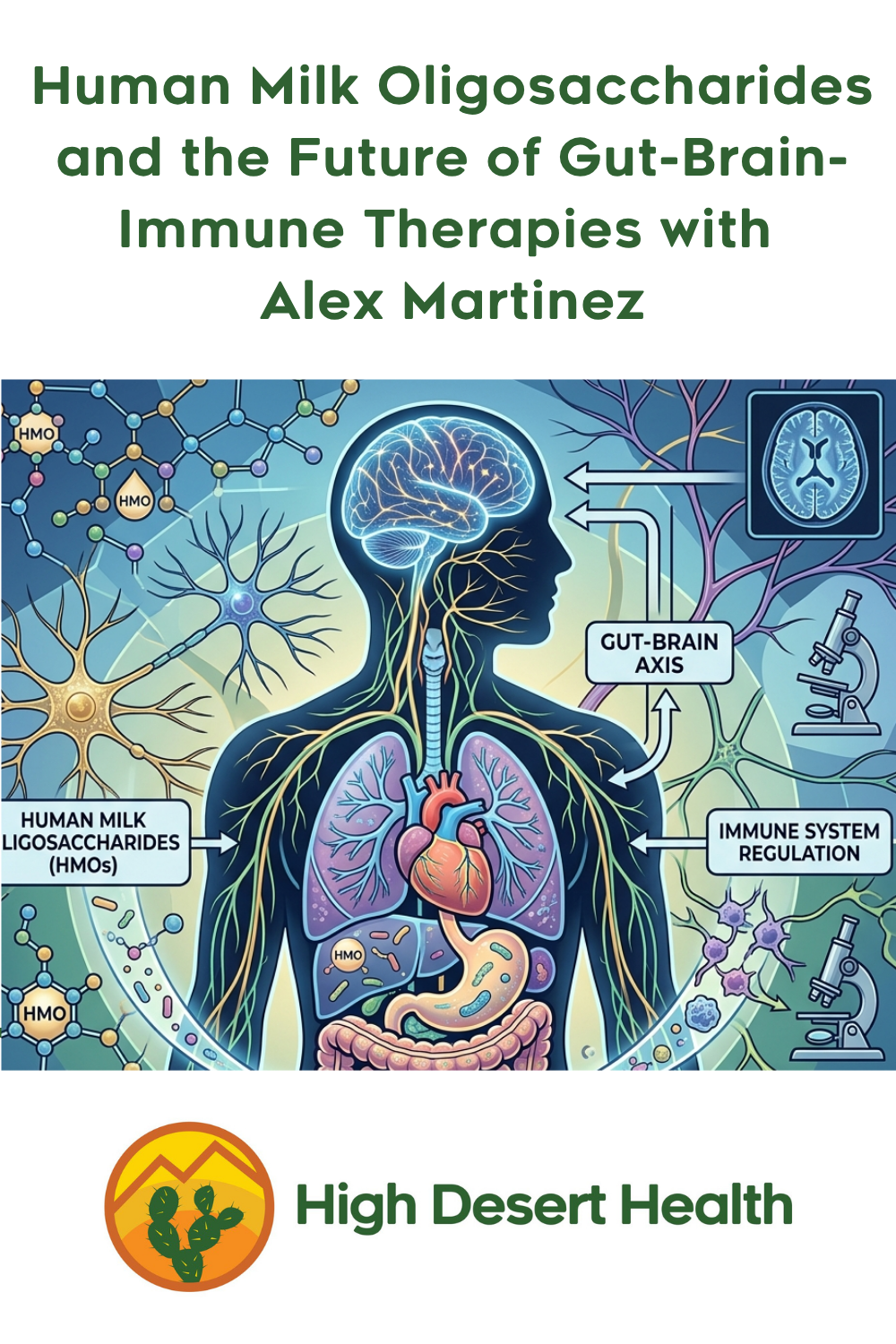
Adapted from episode 167 of The Perfect Stool podcast and edited for readability with Alex Martinez, CEO and Co-founder of Intrinsic Medicine and Lindsey Parsons, EdD.
Lindsey Parsons:
So do you want to share with us what took you from working in law and pharmaceuticals to co-founding intrinsic medicine?
Alex Martinez:
Yeah, absolutely. As with everything, it’s usually when you realize the position you’re in is not the position where you can make the impact that you desire. And I probably started my journey into this even before I began my formal education and professional career.
The first job I had, I grew up on a farm in central Maryland, and after about 10 years of farm labor, my first position outside of that was working as an instructional assistant for children with special needs, specifically severe autism, nonverbal children. And so that was an extremely special experience I had, and it was something where, firsthand, I was able to immerse myself in the needs of children as well as families, and see how they were trying to orient themselves, and realizing that there’s just many different ways to create a difference around the different angles that are needed for cases like autism, where there’s a social component, there’s a very profound communication component. I think also that really laid the seed for where I am today, because I also saw the GI issues that these children often had, and firsthand, got to participate in some of the early dietary interventions, of course they are constipated, if this is all they eat, but also recognizing the challenges associated with that.
So that was really the fundamental inspiration that transcended when I went to UPenn for school, and that’s really where I wanted to understand the overarching ecosystem that I felt was not serving these children. And so that’s where I focus on public health.
So of course, I went to law school two weeks after I graduated from college, and then from there, I worked in the healthcare system. I was originally going to be a healthcare attorney, realized that in some ways I was perpetuating the dysfunction in the system through that practice. And then led me to Silicon Valley, practiced at one of the top law firms for a year or so, and that was boring and terrible.
So from my early entrepreneurial experience, I actually started a digital health company. Before that was an industry class, it was like 2008, it was an MIT spin out. So that was an important part of my Genesis story, because one anecdote I’ll share from that is we were helping patients take care of themselves in the community setting after being discharged from hospitals, and we used Teach Back to ensure that they could comprehend why they were hospitalized and what their treatment and follow up needs were.
One of the things we found out was there were patients being readmitted with glycemic issues, and we realized that the nurses were showing them how to inject insulin in an orange. Some of them were actually injecting their insulin in an orange in the community setting.
Lindsey Parsons:
Oh my gosh!
Alex Martinez:
Right, and so that’s a gap. It’s not something we think about, and we can’t fault these people. We have to think about the education mismatch to the literacy and comprehension of those patients. Figure out what their comprehension is, and so that’s using teach back, and we actually use virtual avatars. And people are actually exposing where they had comprehension gaps.
So I’ve always thought about how we empower patients with education so they can go through a patient journey and make truly informed consent. Because as I got into the pharmaceutical industry and focused on genetic diseases, I was always concerned about our patients comprehending what they’re doing, joining clinical studies and eventually making pretty major decisions about these treatments.
And just to kind of wrap up, the final thing that got me here is, while I worked on a bunch of transformative drugs for genetic disorders, I realized that all of these chronic conditions, the ones driven by the common causes of dysbiosis and immune dysregulation, the pharma industry really kind of turned its back on.
And so my premise was no one’s developing new therapies for the things that me and my loved ones are going to suffer from. I’m going to do it. And I’m going to take a different approach versus the approach, which I think has a certain amount of hubris in it, we know better than nature, I’m going to lean into the other side and say there is an intelligence in nature that we can’t comprehend.
And I’ll use evolutionary biology to look for molecules that appear at the most vulnerable junctions in human life and then assess those therapeutic properties in a therapeutic context. And that’s what led me to these special oligosaccharides that are found in human milk.
Lindsey Parsons:
Okay, interesting and winding story. Can you tell me about the research around gut bacteria, and gut-brain-immune access disorders? And you can take them one by one or lump them all together, however you want to do it?
Alex Martinez:
Yeah, absolutely. So I think the first thing is, let’s define gut-brain-immune access disorders probably because you, and I’m sure, as your listeners would say, okay, so these guys added another letter, we know about the gut-brain axis. Why did you add immune there?
And this is an evolving space, and what we realize is the cross talk between the immune system, both the innate and the adaptive immune system, that really needs to be called out as its own aspect to modulate this system, because they’re all participants in the system.
And this is where, for a lot of these gut-mediated disorders, we’re seeing that at least subsets, there seems to be a primary immune driver. So for example, major depressive disorder, about a third of patients will have a very clear cytokine profile and associated dysbiosis. Same thing with autism spectrum disorder and even disorders like Parkinson’s, which, based on Brock’s hypothesis, starts with a disturbed microbiome, both in the oral, nasal pharyngeal, but also the gut.
And that’s typically been approached in pharmaceuticals as a neurodegenerative disease, brain first, when there’s been clear evidence for a long time that the prodromal symptom in many Parkinson’s patients is constipation. And it’s constipation and actually a REM sleep disorder, that are some of the earliest symptoms before the motor manifestations of Parkinson’s.
And so then we’re thinking about these protein aggregates, and say, what are they doing? There must be an adaptive context for them occurring that then becomes maladaptive and pathogenic in a chronic context, and that’s where we see a local immune activation, which drives production. There’s a clear dysbiosis, but it’s also one where the metabolites change how the gut’s functioning, what’s crossing over.
And as many people know, like 70% of our immune system is from the gut, and then that immune system is sending out signals that’s changing protein synthesis. And there’s some speculation that alpha synuclein may actually be part of an acute immunological response, that when chronically activated, we have all these excess proteins.
And what are proteins? They’re unstable molecules, especially in a context of oxidative stress, and then they are able to travel directly from the gut up the vagus nerve, central nervous system, where they essentially activate microglia, the local immune system. And eventually they’re overwhelming it as it tries to clear it out, and that creates a lot of collateral damage, namely on neuron function.
So that’s just one example.
So that’s why we thought it was so important to add that immune component, because we think that we have to essentially look at the gut as an ecosystem, but we actually have to look at the entire human biological system, including the somatic cells, as part of that ecosystem. I think they’re all connected.
Lindsey Parsons:
What are the somatic cells?
Alex Martinez:
The immune cells, but even the colonocytes as well. They’re all talking. And I think this is one of the other interesting things about the human milk oligosaccharides.
What’s fun about these is that they’re not ours, they’re not intrinsic medicines. They belong to everyone, and I think of us like Sherpas. We’re carrying them up this mountain of the burden of scientific evidence to elucidate their properties. They’ve been known for a long time, but it’s like we need to rigorously elucidate their properties so that then they can be applied in the right context.
And I think one of the things that is important, and this is why I think the time is only right now, it’s through the work of people like you and your listeners, the practitioners, for helping diffuse our understanding of the microbiome. But oligosaccharides are called by different names. They’re called glycans. Some of them are also called siglecs. So all this science has been siloed based on semantics.
What are glycans? They are an interspecies language. It’s how organisms communicate, especially microorganisms. So what we’re looking at is a language from mothers to be able to directly communicate to the microbiome, but also to the developing cells in her baby’s body, and saying everything is okay, and essentially providing bumper rails for the appropriate development of this union, this symbiotic ecosystem.
Lindsey Parsons:
You mentioned alpha synuclein. Can you explain exactly what that is?
Alex Martinez:
Yeah, that is the protein that is found in people who pass away from Parkinson’s. So they find aggregates of it, like clumps of that in the brain, and they say this is what causes Parkinson’s. They also found clumps of that in the enteric nervous system, the gut nervous system. And so the mechanistic, or the pharmaceutical approaches, are: okay, let’s take out that protein.
Lindsey Parsons:
Sort of like the amyloid plaques with Alzheimer’s, right?
Alex Martinez:
Bingo. And what these may be is just a marker of a perturbation of a system. And these actually may have been band-aids, right?
Lindsey Parsons:
Like plaques, right?
Alex Martinez:
Yep, yep. They may have been band-aids for what was actually going on, which is you have activated immune cells causing collateral damage and creating oxidative stress that then damages the cells in the body. And then there it’s basically a sterile inflammatory response that’s occurring, right?
So these protein aggregates, we’re thinking about them a little bit differently, because we’re like, the body produces these for a reason, and also has its own clearance mechanism for it. So what we’re seeing is an overwhelm of that mechanism. And so we say, how do we go upstream of this where we can stop whatever’s causing this cascade, and then we can send signals to those immune cells, where they’re able to say, actually, we’ve been overexcited here, right?
Because you think that immune cells are either kind of in soldier mode or in construction mode, and that’s where we want to change them. And that’s one of the fascinating things that I’d want to remark on here, Lindsey, is these molecules don’t just act in the microbiome, so independent of that.
We know some of them enter the bloodstream, and we’ve done our own studies, and we’ve looked at, for example, macrophages, which are the first responders, the innate immune cells. And the phenotype of a macrophage when it’s super active and ready to attack something is called the M1, so that’s the pro-inflammatory phenotype. And then M2 is a regenerative phenotype, where it’s just clearing debris, kind of rebuilding tissues.
These compounds can actually shift an activated macrophage back to a regenerative phenotype, and this is independent of metabolites or anything from the gut microbiome or any signals from the gut microbiome. So that’s really the premise here. We’re looking for a return to homeostasis.
And ultimately, that’s why these compounds exist in early life, because a baby, if you look at their immune system, is totally imbalanced, right? It’s totally hyperactive. That’s why they get rashes. It’s why a food allergen can lead to massive atopic dermatitis and colic and all these other issues.
And it’s been known for a long time that these compounds can ameliorate all that and change their lifelong trajectory in all of these chronic disorders. And then we just looked at adults with these different gut-immune-brain axis disorders, and we looked and we said their immune systems, their gut permeability, is like an infant.
So the simple question is: does that same biology that benefits babies benefit grown-ups?
Lindsey Parsons:
So if you’re looking at the human milk oligosaccharides as food for Bifidobacteria in babies, that then allows them to produce short chain fatty acids. Would butyrate not be the end result of all of this in either direction?
Alex Martinez:
It’s an absolutely great question. So it’s part of it. Yeah, it’s a good part of it. One of the reasons is that butyrate actually does have its utility, and it’s been shown. But as I said, it’s only a portion of the benefit, right?
So, for example, these compounds are preferential substrates for Bifidobacteria, one of the things that they also do. So my lead compound is called 2’-FL. It actually upregulates adhesion genes in Bifidobacteria, so it actually adheres and colonizes. It also serves as a soluble receptor decoy for invasive E. coli as well as enterotoxins. So what it’s doing is it’s advancing the bugs we want, our friends, Bifidobacteria is a food source for them, but it’s also telling them to bind, and it’s helping them outcompete pathogens.
At the same time, the direct molecule itself is also binding to TLR4, so it’s blunting the immune response so that the gut can mature and heal, because it’s clearing out all those pathogens that would be activating the immune system in a permeable manner.
And it’s also changing gene expression in those colonocytes, upregulating tight junction proteins, occludins, claudins, right? So that’s where we say, I think butyrate is a great compound if you want to promote colonocyte function. That’s what colonocytes like. If you want to bathe them in that, it has utility there. I think in research it definitely can help mechanistically identify some of these actions.
But we also know that you can give the HMOs to healthy, normal adults who are free living on their own diet, not a standardized diet, and we can increase butyrate levels as well as propionate and some of the other short-chain fatty acids. So this is an upstream approach, right?
Lindsey Parsons:
That’s further upstream than butyrate, okay. So we haven’t actually gone an intro to what human milk oligosaccharides are, and I covered them a couple other times, but let’s do that so we don’t lose people.
Alex Martinez:
Oh, sure, absolutely, absolutely, I always jump ahead. Thanks for keeping me on track. Lindsey, okay, so human milk oligosaccharides are a class of oligosaccharides, basically bioactive sugars. They’re found in human milk. They’re the third largest solid component in human milk, after fat and lactose.
And what’s important about that third runner-up category is they’re actually first when it comes to non-caloric molecules in milk, because fat and lactose are used primarily for calories. Human milk oligosaccharides are amylase resistant so we cannot digest them for caloric energy.
And to give you an example of how prominent they are. In early milk, like colostrum, they’re like 15 grams per liter, and in mature milk, they’re still about five grams per liter. And there are over 200 distinct structures of them.
And this is also important, because these compounds require special synthesis. They require a lot of energy for a mother to synthesize, and so to have them in such specific diversity and concentration, and without providing caloric energy, means they’re really, really important.
Lindsey Parsons:
Did you say there’s 200 different types?
Alex Martinez:
Two hundred different molecular structures of oligosaccharides. And what’s really interesting about that is, we have data showing that, even though they’re made of the exact same thing, they have a different bond and their activity is completely different. So it’s like what I said earlier, when we think about these sugars as a molecular language, glycobiology has always been extremely hard to crack because it changes over time.
Honestly, our tools to specifically identify these are limited because they all have the same components, so when the only difference is shape, that’s really challenging to see. And so while it’s been an exciting field, there’s never been, like, how many sugar-based drugs are there, right? That’s a trick question. There’s only a few. The one that most people will know is heparin, and then there’s some aminoglycoside antibiotics. That’s it. There’s very little.
And so when we look at HMOs, those 200 distinct structures, I almost view that as the Rosetta Stone of glycobiology, because that is a mother’s repertoire to talk to the cells in the baby’s body.
Further in that 200, there’s basically three different broad categories. There’s fucosylated, and there’s acidic and neutral ones. And so all of those have different functions, and that’s what we’re figuring out right now – what they all do.
Lindsey Parsons:
I’d heard of 2’-FL. What are some of the other ones that are commercially available at this point?
Alex Martinez:
So 2’-FL is absolutely the foundational one of those, and that’s why it’s been most readily studied. And there’s a few different sources – we’ll talk a little bit later. We’re actually launching a clinical-grade one in about a month or so, because I have conversations like this, and then the logical question is, wow, we’d love to try this on ourselves and patients we work with.
And so we’re finally working to make that accessible. 2’-FL is 30% of those 200, so that’s certainly the base of the pyramid.
The other ones that I think have important functionality come from the acidic side. So those are 3’-sialyllactose and 6’-sialyllactose, and these are a great example of what I just said, because these compounds are exactly the same except they have a different bond, right? They have three prime and a six prime, different functions.
3’-SL has benefits, we actually started Intrinsic Medicine around 3’-SL, but it didn’t have the same commercial availability. So we’re always trying to balance access, availability, with the scientific rationale for something.
So 3’-SL is the primary anti-inflammatory oligosaccharide in human milk, and it’s shown to be capable of really promoting joint and bone development, as well as having effects in things like rheumatoid arthritis and juvenile idiopathic arthritis. It can have positive effects that look like today’s immunosuppressive drugs, but it’s extremely safe.
And so the question is, how is it working differently? Immunosuppressive drugs say, “the immune system is causing all this problem, we’ll take it out, we’ll eliminate it, we’ll suppress it,” and then you have a bunch of side effects, which include severe infections.
So how does 3’-SL exert similar benefits on cartilage healing and systemic inflammation going down? It activates resolution pathways. There’s an acute phase of inflammation, and then there’s a resolution side, where it resolves, and you’re taking those immune cells and saying, okay, it’s time to rebuild and stop destroying things. So that’s what it activates. That’s a really interesting mechanism.
And then 6’-SL is interesting because it’s implicated in neurological development. One of the key talking points with HMOs is that there’s probably not a one-size-fits-all. I think that’s what a lot of commercialization has been, “here’s our proprietary blend that’s perfect for you.”
But when we look at nature, we have to take the clues from nature. This is a completely dynamic system. Moms are producing different levels of HMOs based on environmental context as well as the baby. It completely changes.
We can look at epidemiology and levels of these compounds in milk for different babies. Some moms are producing lower levels, others higher levels. 6’-SL is associated with better development of executive function long term. 3’-SL is operating on connective tissue and bone. 6’-SL is operating on muscle as well.
It upregulates something called PGC-1α. What’s neat about PGC-1α is all of us can upregulate this, and if you upregulate it, it promotes muscular growth. And what is it? It’s exercise, right?
So we think a little bit about this and say, what is this 6’-SL doing in milk? And you’re like, well, how do babies grow? Babies are strong. I remember holding my son and thinking, how are you getting stronger, you just lay around all day.
And it would make sense that milk would contain a bolus of, effectively, an exercise mimetic that would enable babies to grow healthy, functional muscle. And it actually makes sense that there would be neurological, neuromuscular strength, right? You need that connection, that functional muscle. So it totally would make sense for this compound.
So I think these are probably the most mature ones. LNT is another one that I think is widely available, that one is primarily one of these bifidogenic substrates. It really is designed to enhance fermentation, and that one makes sense in the context of cross-feeding because bifidobacterium are a keystone species. They’re like bison or buffalo. And then they cross-feed all these other adjacent microbes, and that’s part of what creates the community.
And then there’s one more, which people may know of, LNNT. Does that ring a bell?
Lindsey Parsons:
Not really.
Alex Martinez:
Oh, okay. Well, that’s another one that’s commercially viable, and it lets me talk about something that’s also a little bit nerdy, but should be interesting, hopefully. And also, I think it illustrates the point about thinking of these as interspecies communication molecules.
So while we call them human milk oligosaccharides, it also makes sense to call them milk oligosaccharides, right? And that’s one of the things that actually gives me a lot of hope, especially because I want to eventually move off of anything based on animal studies and make the argument that we could do this in human organoids. And like mice, also, their milk contains 2’-FL, 3’-SL, 6’-SL, right? These are not genetically engineered mice. These are just normal mice.
And so what we’re able to do is actually look at what it does in a mouse with an organic disease or chronic condition, see how one of these oligosaccharides can benefit it, and then show that the same exact biology is occurring in human cells. So it’s a really close translational point, and that was actually part of the thesis of developing this, because there’s a reproduction issue in today’s science. Like 40 or 50% can’t be reproduced. So I think there’s a good translational basis.
But anyway, going back to LNNT, it goes beyond human milk. These oligosaccharides may predate mammalian evolution. They go way back. And the reason I’m saying this is that there is – are you familiar with helminths? Because helminths can be used medicinally, even though, how can this outside organism modulate the immune system?
Well, helminths produce LNNT, and it enables them to move through tissue without eliciting a strong immune response. And importantly, it enables them to move through tissue without inducing fibrosis, which could harm the host.
And so the team actually looked at this, and they used LNNT in burn and scarring dynamics, and lo and behold, it helps in normal, non-fibrotic healing.
Lindsey Parsons:
Just for people who don’t know what helminths are, they’re worms that people take to actually deal with severe allergies, migraines, things like that. And they let them pass through their system for a couple months. And then they take anti worm medicine to get rid of them so they don’t go out of control. And then they reintroduce them when they need them, something like that, roughly.
Alex Martinez:
Yeah, it’s crazy when I first heard it, and then I dove in and I made this connection. And I say, this is really, how does that same sugar relate to helminths to human milk. Again, that’s the intelligence and magnificence of nature. It finds something that works, and then makes sure whoever needs it gets access to it.
Lindsey Parsons:
Yeah, I tried for the longest time to get somebody on here to talk about helminths, and there was a guy who was selling them. And his method had been to go somewhere in Africa, I can’t recall where, walk around a dirty latrine area in his bare feet, until he knew he was going to get those worms and then go home and culture them from his stool and clean them off and sell them.
Suffice it to say that he did not want to attract too much attention to himself.
Alex Martinez:
Yes. And actually, I may know somebody if you ever want to revisit that. And it reinforces the point, which is, I think we’re on our own. It’s a grassroots effort, right? That is for sure.
Lindsey Parsons:
We’re all an n of 1, trying to figure out what the heck’s going on, right? So that’s the different types of HMOs you mentioned. A couple of them had the word lactose in them.
So I am curious, because there’s a lot of people who do not do well with lactose, who are adults, do they have lactose in them? If you’re going to take them and you’re lactose intolerant, do you need to take your lactose pills too?
Alex Martinez:
It’s a great question. This is interesting. I always urge caution. My overarching philosophy in gut health is that everything needs to be pro empowerment, right? This is our opportunity to say, okay, we know our bodies, we’re going to listen to them. And by the way, I had severe IBS-D since I was like 11, and when I finally obtained a consistent supply of 2’-FL, I have constructively cured it, 95% reduction in symptoms that were crippling and debilitating, and so that was part of a long titration. And I also thought I had a lactose intolerance component as well. Didn’t have that. I actually drink milk every single day now.
My chief medical officer is severely lactose intolerant, and is able to take these daily at our high therapeutic doses. They have lactose in the backbone, it’s never free, if that makes sense, in the gut, so it’s not recognized or metabolized as such. The issue is that the substrates for producing 2’-FL are lactose and glucose, so there always probably is going to be a trace amount in there.
And that’s where I think, on a basic precautionary level, if you’re taking 2’-FL, just take a lactose pill with it.
Lindsey Parsons:
Yeah, but I’ve taken 2’-FL, and I’ve never had any problems, and I am severely lactose intolerant.
Alex Martinez:
Exactly, right? We have those anecdotes. That’s also part of what we’re trying to do at Intrinsic is we’re trying to run the RCTs, the randomized controlled trials, where we can show the benefit, where we can also map all the adverse events, and then we can really have a discussion. We can actually inform it, versus where we are today, where it’s largely anecdotal, and people have their concerns.
And we’re able to say, well, actually, no one’s had an issue with this. But until I can prove that, I’m not going to say that. I’m going to say, trust your own body, it’s going to be a very trace amount of 2’-FL by itself. Part of the beautiful things it does is it actually reduces food allergies, and that’s fantastic.
So it’ll actually reduce the reactivity. One of the anecdotes, and this was part of my philosophy, I said, imagine how amazing the drugs we’d have today would be if every CEO is required to take theirs and be patient zero. And so I’ve led with that philosophy. I’ve also been on 3’-SL for several years, and in that time period I’ve had no flares of my lesion atopic dermatitis, and this is another area where it has benefit. The skin is also part of the connective tissue.
And so after I’ve had these great, fantastic results, my son had crazy atopic dermatitis. When he was born, he had severe food allergies. It turns out my wife had a bunch of food allergies that were then basically IgE antibodies being passed through the milk. And when we did allergy testing, he was EpiPen allergic to the top 21 allergens. It was scary. It was really scary. And you have this little teeny human being, and they’re in distress, and you’re like, what is he going to eat?
And I went into the literature, and I saw the food allergy data with 2’-FL, and it’s generally recognized as safe for infant formula as a supplement for infants and toddlers. So I was like, I can do this. Why is this not available? And so I started administering it to him. I know how important milk is. We literally had to go off breast milk.
And so anyone who’s donated milk, you are an angel, you’re an absolute hero, because that was really important. And then we actually had to import, by the gray market, formula from Europe as well, because the allergenic formulas in the US are pro-inflammatory. They’re corn-based.
And so then I was mixing up his formula with 2’-FL and we did sublingual immunotherapy, and he can now eat every single one of those 21 allergens. He can eat a peanut butter sandwich and doesn’t need to carry around an EpiPen. And it was all part of taking what’s out there, taking this molecule, knowing that it would provide the context for his immune system to balance itself while recognizing these antigens. And we got him completely off.
Lindsey Parsons:
So the immunotherapy you did was that through an allergist or are you talking about the low dose immunotherapy that people do?
Alex Martinez:
It was through an allergist, and it was just really, just tight, titrated allergens. But yeah, we mapped it out because normally you do it singly, and I think with the background of 2’-FL we felt comfortable going and doing all of them in this, so it was just a linear course. And it was amazing. It was amazing to see that.
Lindsey Parsons:
Okay, I see we’re already getting sort of low on time, and I feel like we maybe haven’t hit the juice of what we’re supposed to be hitting. But, but a couple quick questions, so do you derive HMOs from cow’s milk? Is that where they’re ultimately coming from?
Alex Martinez:
No, and it’s a great question. I’ll try to be brief with this one. So cows are bred for volume, high lactose. So cow milk is actually extremely low in milk oligosaccharides. It’s only 0.5 grams per liter. It’s extremely low. We don’t derive it from cow milk. Originally, some of the research ones were, but we didn’t want to do that. And some mammals have different sialic acids, for example.
So these are produced with precision fermentation. So the human gene is in a microbe that then is fermented with lactose and sugar, and then it produces 2’-FL, which is then processed. And you remove endotoxins and all the other stuff, and then you’re able to have a purified, human-identical milk oligosaccharide. And that’s important in making them cheap as well.
Lindsey Parsons:
I assume that would mean there’s no dairy proteins in them?
Alex Martinez:
So it depends on what the lactose sources are. It is minimal, and that’s part of the downstream processing.
Lindsey Parsons:
Okay, yeah. So have you guys already gotten to the level of doing RCTs or prior to that what kind of research have you done?
Alex Martinez:
Yeah, so we’ve actually done a lot of transcriptomics work, which is looking at how milk oligosaccharides impact gene expression in different cells. And so that’s where we’re some of the first to actually look at the direct effects and the systemic effects, right? Because 1 to 4% of these with oral dosing, up to 4% enter the bloodstream and they’re bioactive there, so we really wanted to understand that.
And then, through some of our partners, there are actually ongoing RCTs. So for example, we’re developing for inflammatory bowel disease. Cincinnati Children’s Hospital currently has 200 young adult and pediatric patients with ulcerative colitis and Crohn’s enrolled in a 2’-FL study that’s been going for about 52 weeks, and most importantly, the safety component was completed, and they were able to step down to younger children. So I’ll actually be catching up with them pretty soon, but actually expect us to have some results later this year.
And then we also are running our own studies. So we received Australian regulatory approval to initiate a Parkinson’s Disease study in patients with mild and moderate Parkinson’s disease and a history of constipation. So that’ll be our first sponsor-led study, and I think that one’s going to be really important, because we’re going to assess both the GI aspects, right, so we’re going to be doing irritable bowel syndrome, constipation type endpoints, but then as key secondaries, we’re going to have the motor and non-motor symptoms as well as cognitive function, and that’ll be six months of dosing.
And then we’ll also be doing full multi-omics profiling, so that’s gut microbiome, the metabolites, and then looking at the blood of these patients for a whole host of different markers, and then paralleling that with objective clinical things, balance, physical therapy, motor function assessments. So that’s going to be a great data set that we will offer to the community after that study.
Lindsey Parsons:
And what about any studies related to autism and HMOs?
Alex Martinez:
Yeah, so we are actually currently working, we’re engaging with a bunch of different autism experts. We have our own anecdotes with the compounds, and we’ll be meeting with the FDA in the second half of this year to discuss what those studies are.
And I think what’s notable about that is each one of 2’-FL, 3’-SL and 6’-SL, each have a distinct mechanism that can benefit patients with autism. And so we’ll initially start with the GI aspects, and then we’ll use that as a foundation. We do have some pretty compelling anecdotes, also supported by preclinical data on the REA cells, ability to reduce that irritability and self-harm activity. So I mean, those are really exciting things, and I know we’re at time.
But I think one of the other important aspects when we think about HMOs as therapies or even nutraceuticals is there’s no live bacteria in them. And this is really important for the autism community, because there’s a lot of aspiration and there are a lot of special dietary needs.
So these don’t need any flavor masking. 2’-FL actually tastes delicious. I don’t know but it tastes pretty good, yeah. And so you can mix it into different things. But one of the things that is always important to remember, if you’re trying to use probiotics in a vulnerable population, is that it’s a live bacteria that can thrive and colonize the human body.
And so infections have been seen in immunocompromised patients, and that’s certainly not something that we would want aspirated.
Lindsey Parsons:
Yeah. So I interviewed Beau Berman from Layer Origin* (use code 10STOOLPOD for 10% off) back in episode 38 a good while ago, and I know they’ve got both Pure HMO Powder that’s 2’-FL and they have the Super HMO Prebiotic mix that has the five HMOs you mentioned. So I’m wondering how, if at all, your products are going to be different from theirs? And also does colostrum have all of these things inside it? I know there’s other components in colostrum, like IgG and lactoferrin. So I’m just wondering if colostrum covers all your bases?
Alex Martinez:
So well, I’ll answer the colostrum one. So colostrum will have a full stack of pooled HMOs, but it’s not going to be at a therapeutic concentration.
Yeah. And then I think with Layer Origin, I mean, they’ve been doing it for a long time, and I’ve actually used the product. And so I don’t have my 2’-FL out yet. So I would encourage someone to try Layer Origin. I know where they get it. It’s not where I would get mine.
Calling something high purity is great. But what are the impurities? Because these are extremely bioactive compounds, and if downstream processing is not done right, you actually do have impurities. And, unfortunately, I have received batches where it doesn’t work. And so quality control is extremely important for what Intrinsic Medicine is doing.
What we’re actually doing is pharmaceutical cGMP grade material. So it’s a very strict process as a heightened standard on any food grade, GMP grade. And I think the benefit of us having a wellness component is that we’re using that same clinical standard material, which has also standardized impurity profile.
I think that’s going to be one of those important things in the next step as the HMO market is unlocked, where I encourage people to be responsible. And I actually think Layer Origin has improved their quality control. So I don’t want to disparage them, but the characterization of those residual 2% or so is so important.
If somebody is getting it and they’re not doing downstream processing, it can have endotoxin in it. These are produced in E. coli, right?
Lindsey Parsons:
So people could ask for a certificate of analysis if they want to look at what’s in any batch, I’m sure.
Alex Martinez:
Yeah. Basically, we need to move to a hyper-transparent paradigm with these compounds, and my hope is that they don’t become the next probiotic, where everyone’s putting them in everything. And because there is a target you need to hit, it’s going to be different for everyone. And if you take more, which, especially in America, we were always thinking more is better, you actually diminish the effect.
Yeah, we’re going to have a clinical basis for everything we do. And then we’ve also developed a novel titration, because that’s also really important, because most efficacious doses are ones that people will actually have tolerability issues in the early weeks, as their microbiome transfers, and as you get this huge bolus of short-chain fatty acid production.
And when you’re going into people that have a background of IBS, of GI sensitivity, yes, it’s not right for them, and they’ll lose something that if they had just taken a different way would get them to their goal, their health and wellness goal.
Lindsey Parsons:
So okay, so tell me where people can find you? You’re going to be selling these products over the counter, correct?
Alex Martinez:
Yes. So that’s going to be launched through a distinct company called Intrinsic Wellness. And I probably expect that to come out sometime next month.
Lindsey Parsons:
Yeah, so before this will publish, a little has been out by the time this publishes, yeah.
Alex Martinez:
So, I’ll basically be sending you the the link and everything,
Lindsey Parsons:
Okay, so I’ll put a link in the show notes. I think there’ll be an affiliate link at that point, so people can use that if they want to try something out. Any final thoughts before we get off?
Alex Martinez:
Yes, there always is something. One of the things I’ve been thinking about recently is a lot of people have taken that quantified self approach and are thinking about biomarkers, and are everyone’s tracking everything right, and they’re doing it where folks wake up in the morning and say, let me check my sleep score.
Lindsey Parsons:
Every morning!
Alex Martinez:
Right, right. And so I fully honor that, and I think it’s a great tool, but I always want to remind people to use the tool to rediscover that body awareness. And I think with GI issues, the Bristol stool form scale is absolutely your friend, and now it is a lagging indicator. And it’s going to be individualized for everyone.
And so our premise is we want to deliver the best standardized HMOs to people. We want to give them a really easy to comprehend self titration protocol to minimize any tolerability issues and help them get to their goal, which is going to be unique for everyone.
And that’s why we’re also giving the most HMOs in each bag so that they can get to a full, currently-being-clinically-tested dose, and really never have to worry about running out. So we want it to be a consumer-friendly product.
And basically, I’m developing this as my own supply. I said, if I get anything out of this, I want to supply the best 2’-FL for me and my family, and this is exactly what we’re going to deliver on and hope to share with all of you.
Lindsey Parsons:
Okay, great. Well, thanks for sharing about all this interesting stuff.
Alex Martinez:
Absolutely my pleasure. Thanks for having me, Lindsey.
If you’re dealing with gut health issues of any type (diarrhea, constipation, bloating, SIBO, IMO, H2S SIBO/ISO, IBS, IBD, gastritis, GERD, H pylori, diverticulitis, candida, etc.) or have an autoimmune disease and need some help, I see individual clients to help them resolve their digestive issues or reverse autoimmune disease naturally, You’re welcome to set up a free, 30-minute breakthrough session to see if you’d like to work with me. I also have my own two products, Tributyrin-Max, which is particularly helpful for loose stool and diarrhea as it slows your motility and firms up your stool, and SBI powder, which is an all around gut pathogen binder, which is super safe and won’t harm beneficial bacteria, and is usually the first line of treatment I educate my clients about in order to avoid stronger antimicrobial herbs.

*Product and dispensary links are affiliate links for which I’ll receive a commission. Thanks for your support of the podcast by using these links. As an Amazon Associate, I earn from qualifying purchases.