


Butyrate is a short-chain fatty acid produced by gut bacteria when they ferment fiber in the colon. It is the primary fuel source for the cells lining the large intestine and plays a key role in maintaining gut barrier integrity, reducing inflammation, and supporting a healthy microbiome.
Because many people with gut issues don’t produce enough butyrate, butyrate supplementation has become an important tool for improving gut health.
Jump to:
Quick Answers | Benefits | Signs You Need It | Foods vs Supplements
Types of Supplements | Best Supplements & Dosing | How to Take It
Who Should Take It | Safety | FAQ
Quick Answers
What does butyrate do?
Butyrate supports gut health by fueling colon cells, strengthening the gut lining, reducing inflammation, and helping regulate bowel movements (at higher doses firming up loose stool or diarrhea; at lower doses speeding up motility and reducing constipation).
What is the best form of butyrate?
The best form of butyrate is typically tributyrin, which is more absorbable and better tolerated than sodium or magnesium butyrate. There are also patented forms of encapsulated butyrate that are colon-targeted and highly absorbable.
Butyrate Benefits for Gut Health
Butyrate is one of the most important compounds for digestive health. It helps strengthen the intestinal lining, which can reduce intestinal permeability, often called leaky gut.
Butyrate can also help normalize bowel movements, particularly for people with loose stool or diarrhea, and plays a role in restoring balance in the gut microbiome and calming inflammation in the colon.
Butyrate also plays an important role in immune regulation and may be particularly relevant for people with autoimmune conditions. By strengthening the gut lining and supporting regulatory immune pathways (including T-regulatory cells), butyrate may help reduce inappropriate immune activation that contributes to autoimmune disease.
Learn More on the Podcast or Blog
I’ve covered butyrate and gut healing extensively on The Perfect Stool podcast and on my blog.
- Episode on Butyrate – Blog on Butyrate
- Gut Health 101 Episode – Gut Health 101 Blog
- Episode on IBS – Blog on IBS
- Episode on Post-Infectious IBS (Recurrent SIBO) – Blog on Post-Infectious IBS
Signs You May Need a Butyrate Supplement
Low butyrate levels are almost universal in people with gut dysfunction. Signs include irregular stool, bloating, gas, cramping, and food sensitivities.
Many of these symptoms overlap with SIBO and dysbiosis (microbiome imbalance) and may require gut testing and a more complex protocol to resolve your issues. However, butyrate is often an important part of that protocol.
Butyrate Foods vs. Supplements
Butyrate is produced indirectly from fiber found in foods like vegetables, resistant starch, legumes, and whole grains.
However, many people cannot tolerate these foods or lack the bacteria needed to produce butyrate, making supplementation more effective.
Butyrate Supplements: Tributyrin vs Sodium Butyrate
Sodium or Magnesium Butyrate
Sodium butyrate (or magnesium butyrate) are the most common forms of butyrate supplements. However, they have several drawbacks. They have a strong odor, require more pills for an effective dose, and are less efficiently delivered to the colon.
Tributyrin (Preferred Form)
Tributyrin is a more advanced and highly absorbable form of butyrate. It delivers butyrate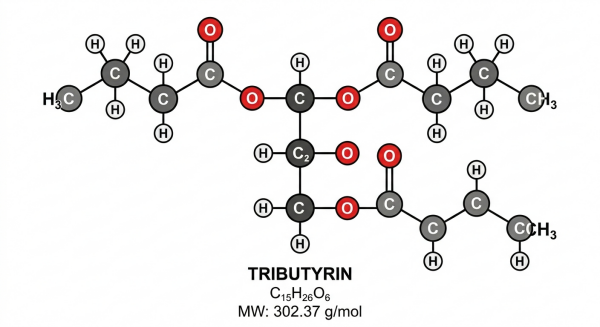 more effectively to the intestines and is generally better tolerated, without the strong smell associated with sodium butyrate. It also requires fewer pills to reach an effective dose.
For most people, tributyrin is the preferred option when choosing a butyrate supplement.
Tributyrin vs Sodium Butyrate (Quick Comparison)
- Tributyrin: better absorbed, better tolerated, lower dosing for effectiveness
- Sodium butyrate: cheaper, less effective absorption, requires higher dosing
Best Butyrate Supplements and Dosing
If you’re looking for a high-quality butyrate supplement, tributyrin or one of the patented, micro-encapsulated forms of butyrate (ProButyrate and AuRx) are typically the best choices. Many online supplements come from unknown or poorly vetted manufacturers, so their ingredients, dosages, and purity often aren’t reliably verified, so it’s best to buy from a trusted, recommended source.
Once you’ve verified a trustworthy source, the main difference is in the dosing.
High-Dose Butyrate (500-750 mg or more)
Best for people with diarrhea or loose stool. Recommended forms:
Tributyrin-Max – (use code INTRO15 for 15% off) – 750 mg capsules – Tributyrin-Max provides the highest dose of tributyrin in a single capsule so it’s well-suited for people who need high doses of butyrate (e.g., people with consistent diarrhea or loose stool).
Tributyrin-X Biome Builder – (15% off via that link) – 500 mg gel caps – A good choice for people who need an intermediate dose of tributyrin or who have trouble swallowing a regular-sized capsule.
AuRx – (discounted in my Fullscript dispensary via that link) – 825 mg/scoop – powdered form, best option for children or people who can’t take pills, uses a special technology to micro-encapsulate the butyrate to deliver it to the colon and improve the taste
Low-Dose Butyrate (200-300 mg)
Best for people who are constipated or who have shown high sensitivity to supplements in the past. Recommended forms:
Probutyrate – (discounted in my Fullscript dispensary via that link) – 300 mg capsules – uses a special technology to micro-encapsulate the butyrate to deliver to the colon
ButyrEn – (discounted in my Fullscript dispensary via that link) – 200 mg capsules, a good quality, low-dose option
Tri-Butyrin Supreme – (discounted in my Fullscript dispensary via that link) – 300 mg soft gels, another good quality, low-dose option from one of the most respected, practitioner-grade supplement companies
How to Take Butyrate
Butyrate supplementation should generally start at a low dose taken with a meal and increase based on response. Many people begin with one capsule daily and adjust depending on stool consistency and tolerance. People with loose stool may need 1-2 high-dose capsules per meal to get to good consistency stool. If stool becomes too firm or you experience constipation, reduce your dosing. People with constipation should start with one pill every few days and increase to once a day as tolerated.
Who Should Take a Butyrate Supplement
Butyrate supplements may be helpful for people with IBS, IBD, chronic diarrhea, microbiome imbalance, post-antibiotic gut issues, or symptoms of leaky gut.
Keep in mind that long-standing, complex gut health issues (like IBD, recurrent SIBO, severe dysbiosis, candida overgrowths) will likely require a more comprehensive gut healing plan. Tributyrin is often an important part of that plan, but it is unrealistic to expect that it will single-handedly solve your gut health problems. If you are looking for more help in solving your issues, you can set up a free, 30-minute Gut Healing Breakthrough Session.
You may also need the help of other supportive supplements. For sudden onset diarrhea from food poisoning or a virus, or continuing diarrhea or loose stool following international travel, Serum Bovine Immunoglobulins may be a helpful addition.
Side Effects and Safety
Butyrate supplements are generally well tolerated. In some cases, higher doses may lead to constipation, which can usually be resolved by reducing the dose.
People with a history of colon polyps or colon cancer are typically advised to avoid butyrate supplementation unless directed otherwise by a healthcare provider.
Frequently Asked Questions
What does a butyrate supplement do?
A butyrate supplement helps support the gut lining, reduce inflammation, and improve stool consistency by delivering butyrate directly to the colon.
How long does it take for butyrate to work?
Some people notice improvements in digestion within a few days or less, while more significant gut healing may take several weeks.
Is tributyrin better than sodium butyrate?
Yes. Tributyrin is generally better absorbed, better tolerated, and more effective at delivering butyrate to the intestines.
Can I take butyrate with probiotics?
Yes. Butyrate can be used alongside probiotics, though some people prefer to start with butyrate first if they are sensitive to other supplements.
Can I take butyrate with antibiotics?
Yes! It’s highly recommended that you take butyrate while on antibiotics, as antibiotics kill off the beneficial bacteria in the colon that produce butyrate, which can lead to long-term dysbiosis.
Bottom Line
Butyrate is essential for gut health, supporting the intestinal lining, reducing inflammation, and helping restore balance in the microbiome. While it can be produced through diet, many people benefit from taking a butyrate supplement, especially in the form of tributyrin.